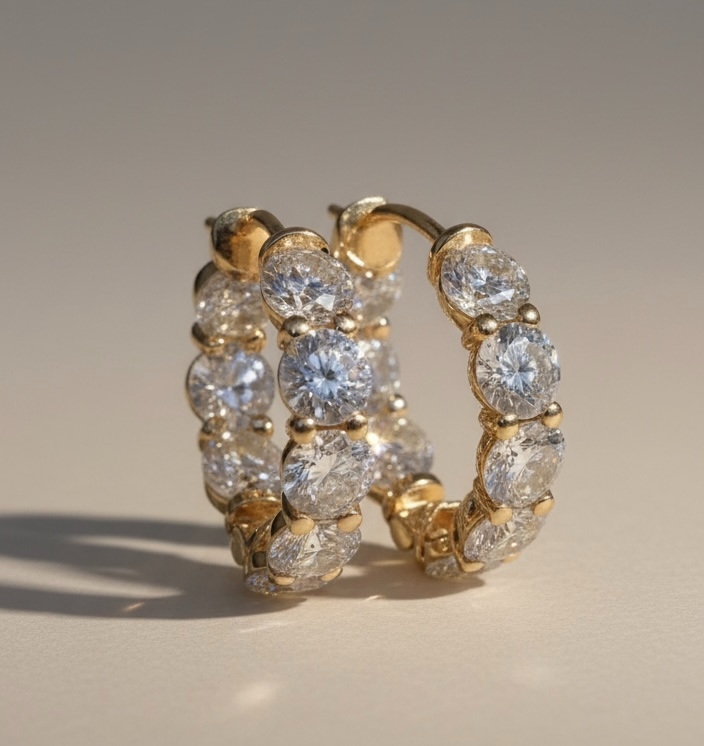
The real cost of owning fine jewelry
When most people consider buying a fine jewelry piece, they think of the sticker price. But the true cost of ownership extends well beyond the initial purchase.
A diamond tennis necklace retailing at $3,000 carries with it an annual insurance cost of approximately $30–60, storage (a quality safe or bank vault), periodic cleaning and prong checks ($50–150/year), and the very real risk of loss, damage, or theft that no amount of care fully eliminates.
Over five years, that $3,000 necklace may cost $3,500 or more in total ownership expenses — for a piece that, on average, gets worn a handful of times per year. The cost-per-wear math rarely flatters ownership.
The cost of renting fine jewelry
Renting inverts that model entirely. At lumelle, that same caliber necklace rents for $88/day — with protection coverage included, shipping handled, and zero storage or maintenance required on your end.
With an annual lumelle membership at $160/year, members also receive $40 in rental credit every quarter — $160 in total credit annually, which effectively covers nearly two full Statement-tier rental days per year at no additional charge.
For someone who wears fine jewelry four to eight times a year — galas, weddings, travel, dinners — the rental model is almost always the more economical and certainly the more flexible choice.
Buying vs. renting: side by side
| Factor | Buying | Renting (lumelle) |
|---|---|---|
| Upfront cost | High ($500–$50,000+) | Low ($45–$88/day) |
| Flexibility | Fixed — own one piece indefinitely | High — different piece every occasion |
| Resale value | Depreciates significantly | No resale concern — just return it |
| Insurance & maintenance | Ongoing annual cost (1–2% of value) | Included with lumelle protection coverage |
| Occasion fit | One piece for many occasions | Right piece for every occasion |
| Storage & security | Safe, vault, or insured storage needed | lumelle handles all storage |
| Environmental footprint | Higher (mined stones) | Lower (lab-grown, shared access model) |
When buying still makes sense
Ownership is not obsolete. There are pieces worth buying — a piece with deep sentimental value, an heirloom intended for the next generation, or jewelry worn daily as a signature element of personal style. The daily wear calculation changes when cost-per-wear reaches near-zero.
But for statement pieces, occasion jewelry, and anything you would otherwise wear fewer than ten times a year, the calculus increasingly favors access over ownership. Renting lets you wear a $3,000 necklace tonight and a $5,000 pair of earrings next month — without tying capital to either.
The environmental dimension
Fine jewelry rental also carries a meaningful environmental advantage. The shared-access model means fewer individual pieces need to be produced for the same number of occasions. Every lumelle piece is lab-grown, avoiding the land disruption, energy intensity, and supply chain opacity of traditional mining.
For those who consider sustainability as part of their purchasing decisions, renting lab-grown jewelry is a genuinely lower-impact choice — without any compromise on appearance or quality.
Explore lumelle
Frequently asked questions
Is it cheaper to rent or buy fine jewelry?
For occasional wear, renting is almost always cheaper. A $3,000 necklace rented at $88/day costs $88 for an evening. Buying it means $3,000 upfront plus insurance, storage, and maintenance — for a piece that may sit unworn most of the year.
Does rented jewelry look as good as owned jewelry?
Yes. lumelle pieces are genuine fine jewelry — lab-grown diamonds and gemstones set in gold. They are visually and physically identical to mined pieces.
What happens if I damage a rented piece?
Each lumelle rental includes protection subject to the Membership Terms and applicable policy conditions, which covers standard wear and handling.
Can I buy a lumelle piece I've rented?
Yes. If you fall in love with a piece, lumelle offers a lease-to-own path so you can make it yours at a discounted price.